
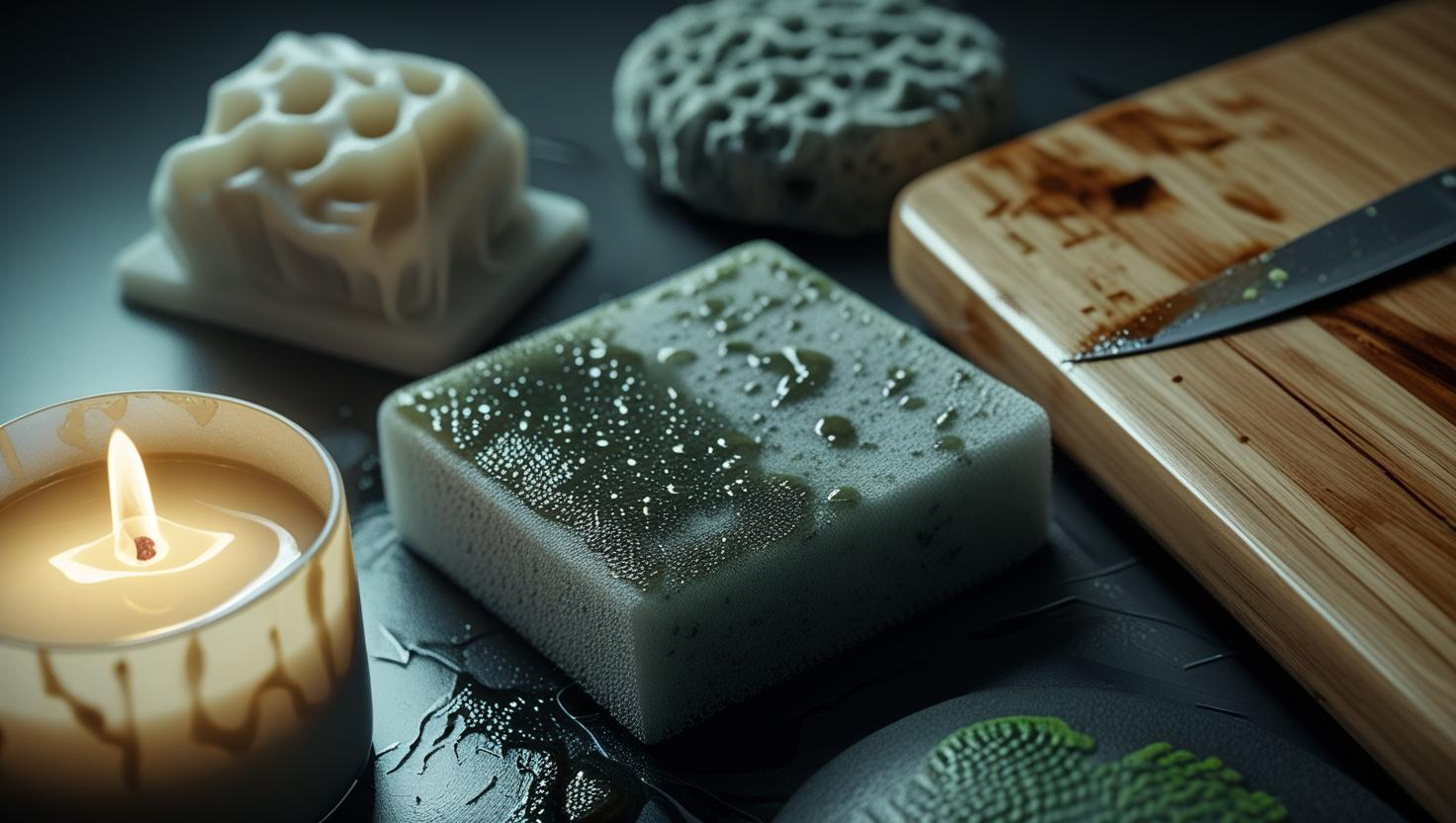
Most of us assume our homes are safe havens — a sanctuary from the toxins and pollutants of the outside world. But what if many of the products we use daily are slowly compromising our health? From your kitchen to your wrist, everyday household items may be harboring dangerous bacteria, endocrine disruptors, and even carcinogens. Health experts like Gary Brecka, Dr. Andrew Huberman, Dr. Paul Saladino, and Dave Asprey have been vocal about the unseen dangers lurking in modern homes — and it’s time we paid attention.
Here are some of the biggest offenders — and healthier alternatives you can switch to today.
1. Kitchen Sponges: A Petri Dish in Disguise

Remember those experiments you used to do back in middle school? Using a cotton swab to pick up microscopic bacteria from doorknobs, bathroom floors (gross, we know), and even toilet seats? Bacteria goes into the protected area in the petri dish, petri dish sits out on your counter for a week, and you have fresh-grown bacteria before your eyes. What if we told you that the item you use to clean your dishes was actually not as clean as it looks?
It might be the most innocent-looking item on your kitchen counter, but the common sponge is a bacterial hotspot. A 2017 study published in Scientific Reports found that used kitchen sponges can contain as many as 362 different types of bacteria per cubic inch, including E. coli, Salmonella, and Campylobacter — some of the same bacteria found in fecal matter.
The sponge’s porous structure and constant moisture create the ideal environment for bacteria to thrive. And unlike sanitized surfaces, sponges are often just rinsed and reused, spreading pathogens onto every dish, utensil, and countertop they touch. As you might have guessed, these pathogens are sometimes toxic, and always harmful to the human body.
Healthier Alternative: Replace sponges with silicone scrubbers, which dry faster and resist bacterial buildup. Better yet, use Swedish dishcloths — biodegradable, machine-washable, and less likely to harbor dangerous microbes.
2. Wood and Plastic Cutting Boards: A Slice of Contamination
Cutting boards — whether plastic or wood — might seem safe, but they carry their own health risks. Wooden boards develop deep grooves that trap food particles and bacteria, while plastic ones get scratched easily, giving pathogens a place to hide.
Research has shown that plastic boards, in particular, can leach microplastics into food, especially when used over time or cleaned in hot dishwashers. Even worse, plastic can contain phthalates and BPA, both linked to hormone disruption.
Healthier Alternative: Go for bamboo cutting boards — naturally antimicrobial and more durable — or glass cutting boards, which don’t scratch and are easy to sanitize.
3. Candles: A Cozy Carcinogen

Candles can set the mood, but they may also be polluting your indoor air. Most conventional candles are made from paraffin wax, a byproduct of petroleum refining. When burned, they can release benzene, toluene, and formaldehyde — all known carcinogens.
Even worse, synthetic fragrances often contain phthalates, which are well-documented endocrine disruptors. According to Dr. Andrew Huberman and Dave Asprey, exposure to these chemicals has been linked to reduced testosterone levels, disrupted sleep, and respiratory issues.
Healthier Alternative: Choose candles made from 100% beeswax or coconut wax, with essential oils instead of synthetic fragrance. Also, opt for cotton or wood wicks, avoiding any metal-core variants.
4. Apple Watch Bands: PFAS Right on Your Skin
It may surprise you to learn that the very wearable designed to track your health could be harming it. A study from 2023 found that many popular watchbands — including those made from fluoroelastomers used in some Apple Watch models — contain PFAS (per- and polyfluoroalkyl substances).
PFAS are referred to as “forever chemicals” because they don’t break down in the environment or the human body. These substances are linked to thyroid disease, infertility, cancer, and immune system dysfunction.
Gary Brecka has highlighted how prolonged skin contact with PFAS-laden materials can lead to bioaccumulation, disrupting hormones and even impacting fertility.
Healthier Alternative: Choose bands made from organic leather or cotton. Look for brands that explicitly advertise “PFAS-free” in their product descriptions.
5. Nonstick Cookware: Cooking Up Trouble
Nonstick pans, while convenient, often contain PTFE or PFOA, chemicals that fall under the PFAS family. These compounds can leach into food, especially at high temperatures. Studies link them to liver toxicity, reproductive harm, and even cancer.
Healthier Alternative: Use ceramic, cast iron, or stainless steel cookware. These materials don’t emit toxins and are generally safer for high-heat cooking.
6. Air Fresheners and Fabric Sprays

Many popular air fresheners and fabric sprays are chemical cocktails containing volatile organic compounds (VOCs), phthalates, and formaldehyde. These substances can aggravate asthma, disrupt hormones, and even increase cancer risk over time.
Dr. Paul Saladino and Ben Johnson have discussed how these seemingly harmless products can contribute to what they call a “toxic burden” — the cumulative effect of everyday exposure to low-level toxins.
Healthier Alternative: Swap out artificial sprays for diffusers with essential oils, or make a DIY spray with vinegar, water, and a few drops of lavender or tea tree oil.
7. Coffee Pods: A Hot Cup of Microplastics and PFAS
If you’re brewing your morning coffee with single-use plastic pods, you might be getting more than just a caffeine boost. Studies have shown that when hot water (near boiling) passes through these plastic pods — especially those made for Keurig and similar machines — it can cause microplastics and even PFAS (per- and polyfluoroalkyl substances) to leach into your coffee.
Gary Brecka and Dr. Paul Saladino have both warned against regular exposure to plastics and PFAS, citing their ability to disrupt the endocrine system, impair detoxification, and even increase the risk of metabolic dysfunction. When you consider that most people drink coffee daily, the exposure adds up fast.
Additionally, heating plastic — especially under pressure — is one of the fastest ways to release chemical contaminants into your food or drink. Some of these coffee pods are made from #7 plastics, which are notorious for containing BPA or BPA substitutes, many of which still have estrogen-mimicking effects.
Healthier Alternative: Switch to reusable stainless steel or BPA-free refillable pods, or better yet, use a French press, pour-over system, or glass Chemex. Not only do these options eliminate plastic exposure, but they also make for a better-tasting, cleaner cup of coffee.
Final Thoughts
The truth is, most homes are filled with items that weren’t designed with long-term human health in mind. Whether it’s the sponge on your sink or the band on your smartwatch, these everyday items can harbor harmful substances — and the impact on your health can be significant over time.
The good news? With just a little awareness and a few strategic swaps, you can dramatically reduce your toxic exposure. Stick with materials that are natural, non-toxic, and minimally processed, and look for certifications like GOTS, PFAS-free, or BPA-free when shopping.
Your home should be a place of healing, not harm — and making small, informed changes is a powerful first step.
Good luck friends.

To keep our platform up and running, Kingdom Health accepts a small commission on items purchased through our links (at no extra cost to you). We thank you for supporting us through your commitment to better health.
Make the Kingdom Healthy.



Leave a Reply